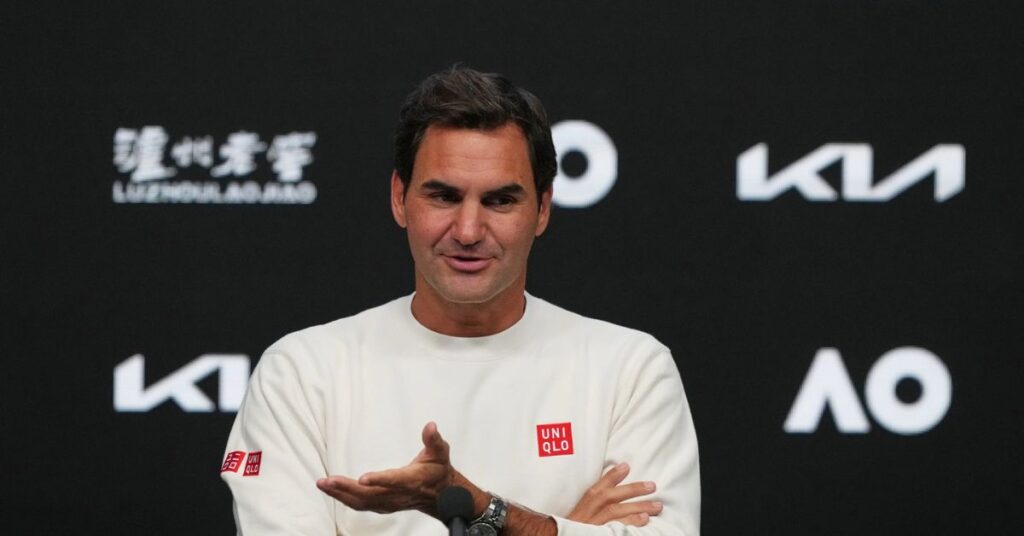

Few voices in tennis carry the weight, respect, and perspective of Roger Federer. A 20-time Grand Slam champion and one of the greatest athletes in sporting history, Federer has seen generations rise, peak, and pass. When he speaks about the future of tennis, the sport listens.
Recently, Federer offered rare and thoughtful insight into the rapidly developing rivalry between Jannik Sinner and Carlos Alcaraz, two players widely regarded as the standard-bearers of men’s tennis in the post-Big Three era. His words captured both the intensity of their competition and the broader impact they are having on the rest of the tour:
“Everybody is trying to keep up and they’re trying to pull away.”
It was a simple statement, yet one loaded with meaning. In it, Federer distilled the essence of elite sport—how rivalries shape eras, force evolution, and redefine excellence.
This article explores Federer’s perspective on the Sinner–Alcaraz rivalry, why it matters for modern tennis, how it compares to historic rivalries, and what it means for the future of the men’s game.
A Rivalry Defining a New Tennis Era
Every era of men’s tennis is defined by rivalries. Borg vs McEnroe. Sampras vs Agassi. Federer vs Nadal vs Djokovic. These battles were not just about titles; they were about raising the ceiling of what was possible.
Now, as the sport transitions beyond the Big Three, the rivalry between Carlos Alcaraz and Jannik Sinner has emerged as the most compelling narrative of the new generation.
Both players are young, supremely talented, and relentlessly ambitious. Their matches are not only physically brutal but tactically rich, mentally demanding, and emotionally charged. Federer’s comments reflect a recognition that this rivalry is not just exciting—it is transformative.
Roger Federer’s Unique Perspective
Roger Federer is uniquely positioned to analyse rivalries. He spent nearly two decades at the top of the sport, constantly adapting to challenges posed by Rafael Nadal, Novak Djokovic, Andy Murray, and others.
What Federer Understands About Rivalries
Federer knows that rivalries:
- Force players to evolve technically
- Demand mental growth and resilience
- Push athletes to redefine preparation and fitness
- Elevate the entire sport, not just the individuals involved
When Federer speaks about players “trying to keep up” and others “trying to pull away,” he is describing a familiar pattern—one he lived through himself.
Sinner vs Alcaraz: Different Paths, Same Destination
One of the most fascinating aspects of the Sinner–Alcaraz rivalry is how different the two players are, despite their shared success.
Carlos Alcaraz: The Explosive Natural
Carlos Alcaraz represents raw athletic brilliance combined with fearless creativity.
Key traits:
- Explosive speed and agility
- Heavy topspin forehand
- Fearless shot selection
- Emotional intensity and crowd engagement
Alcaraz plays with joy, aggression, and instinct. He thrives in chaos, often turning defence into offence in breathtaking fashion.
Jannik Sinner: The Ruthless Precision Machine
Jannik Sinner, by contrast, is all about structure, discipline, and relentless pressure.
Key traits:
- Clean, compact ball-striking
- Exceptional timing off both wings
- Calm, controlled demeanour
- Relentless baseline pressure
Sinner’s game is built to suffocate opponents. He absorbs pace, redirects with interest, and applies constant pressure without visible emotion.
“Everybody Is Trying to Keep Up”: The Tour Feels the Pressure
Federer’s statement that “everybody is trying to keep up” speaks to a broader reality on the ATP Tour.
Raising the Baseline of Excellence
When two players consistently produce extraordinary tennis, the rest of the field is forced to respond. Training methods evolve. Fitness standards rise. Tactical approaches shift.
Players are no longer just trying to win matches—they are trying to match the level set by Sinner and Alcaraz.
This phenomenon mirrors what happened during Federer–Nadal–Djokovic dominance, when players had to become faster, fitter, and mentally stronger just to remain competitive.
“They’re Trying to Pull Away”: A Familiar Pattern
The second part of Federer’s comment—“they’re trying to pull away”—is perhaps even more revealing.
What It Means to Pull Away in Tennis
In elite tennis, “pulling away” means:
- Winning the biggest matches consistently
- Dominating head-to-head encounters
- Performing across all surfaces
- Maintaining excellence year after year
Sinner and Alcaraz are not content with being the best of their generation—they are trying to establish clear separation.
Federer recognises this instinct because he lived it. Once a player tastes the top, the goal shifts from winning titles to owning an era.
Comparing Rivalries: Federer’s Era vs Today
Federer’s own rivalries provide important context.
Federer vs Nadal
- Contrast of styles (grace vs grit)
- Surface-based battles
- Emotional and cultural impact
Federer vs Djokovic
- Precision vs elegance
- Mental endurance
- Longevity battles
Sinner vs Alcaraz
- Power vs precision
- Emotion vs composure
- Youthful hunger vs ruthless ambition
While different in style, the underlying dynamic is the same: mutual improvement through competition.
Why Federer’s Words Carry Extra Weight
Federer is not a pundit chasing headlines. Since retirement, he has spoken sparingly and thoughtfully. When he comments on modern players, it is with respect and nuance.
His remarks about Sinner and Alcaraz suggest:
- He sees them as legitimate era-defining players
- He believes their rivalry will shape the tour
- He understands the pressure they place on others
Coming from someone who defined excellence for two decades, this is significant endorsement.
The Psychological Battle Within the Rivalry
Beyond technique and fitness, the Sinner–Alcaraz rivalry is deeply psychological.
Mental Growth Through Opposition
Each time they face one another, they learn:
- How to manage pressure points
- How to adapt tactics mid-match
- How to recover from setbacks
Federer knows this process well. His own losses often led to reinvention, not retreat.
Impact on the Next Tier of Players
Federer’s comments also hint at the pressure faced by players just below the top tier.
The Chasing Pack
Players ranked 5–15 are caught in a difficult position:
- Talented enough to challenge anyone
- But constantly measured against Sinner and Alcaraz
- Required to produce near-perfect tennis to win
This dynamic creates a widening gap—a trend Federer recognises from his own era.
Fitness, Longevity, and Evolution
One reason Federer’s era lasted so long was constant adaptation. He refined his game, improved his fitness, and evolved tactically.
Sinner and Alcaraz are already doing the same—at remarkably young ages.
What This Means for the Tour
- Higher injury prevention standards
- Smarter scheduling
- Greater emphasis on recovery and sports science
Federer’s comment subtly acknowledges that the sport is moving faster than ever.
Fans and the Revival of Men’s Tennis Narratives
Rivalries are the lifeblood of fan engagement. Federer understands this better than most.
Why Fans Are Invested
- Contrasting personalities
- High-quality matches
- Long-term storylines
The Sinner–Alcaraz rivalry gives fans something to follow beyond individual tournaments. It provides continuity and anticipation.
Federer as the Bridge Between Eras
In many ways, Federer now serves as a bridge between tennis generations.
- He respects tradition
- He embraces evolution
- He recognises greatness without comparison anxiety
His comments on Sinner and Alcaraz are not dismissive of the past nor dismissive of the present—they are contextual and generous.
What the Future Holds
If Federer’s assessment is correct—and history suggests it often is—then the future of men’s tennis will revolve around:
- Sinner and Alcaraz pushing each other to new levels
- Others fighting to close the gap
- A tour defined by extreme physical and mental demands
This is how golden eras are born.
Lessons from Federer’s Observation
Federer’s words offer lessons not just for players, but for fans and analysts.
- Great rivalries elevate everyone
- Dominance is earned, not assumed
- Pressure creates progress
His statement is less prediction and more recognition of an unfolding reality.
Conclusion: When Legends Recognise the Next Chapter
When Roger Federer speaks about modern tennis, he does so with clarity forged by experience. His reflection on the Jannik Sinner–Carlos Alcaraz rivalry captures the essence of elite sport:
Some are chasing. Some are separating. Everyone is evolving.
In acknowledging that “everybody is trying to keep up and they’re trying to pull away,” Federer has effectively framed the next chapter of men’s tennis. It is a chapter defined by hunger, excellence, and rivalry—one that echoes the eras before it, yet feels entirely new.
For tennis fans worldwide, the message is clear:
The future is not coming—it has already arrived.