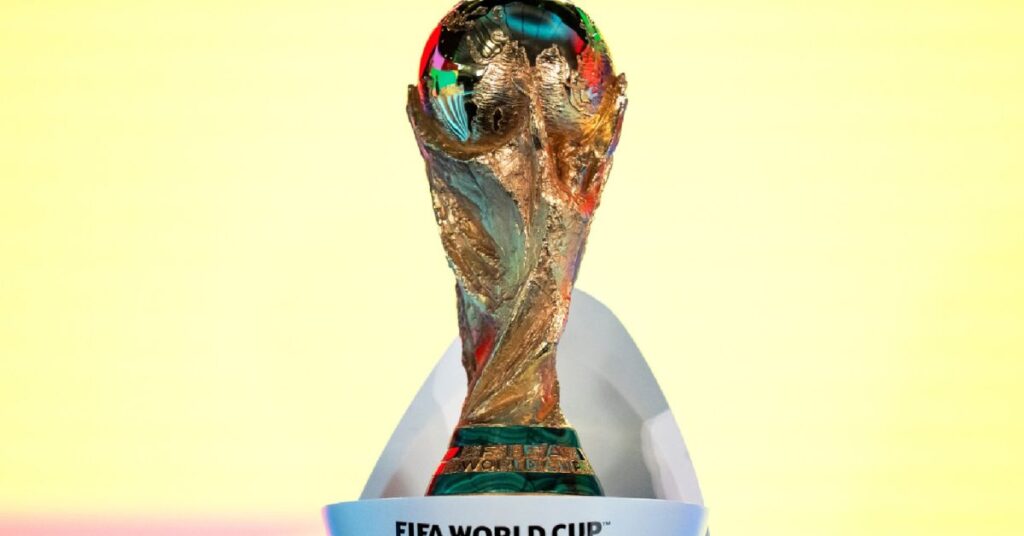

As preparations intensify for the 2026 FIFA World Cup, an unexpected geopolitical undercurrent has entered global sporting discourse. A growing diplomatic standoff between the United States and several European nations over Greenland has triggered unease across footballing circles, leading to conversations—some quiet, others public—about the possibility of political fallout affecting the world’s biggest sporting event.
While no official boycott has been announced, and major football federations continue to emphasise separation between sport and politics, the mere emergence of boycott discussions has been enough to cause concern. With the World Cup scheduled to be co-hosted by the United States, Canada, and Mexico, the geopolitical tension adds an unusual layer of uncertainty to what is already one of the most complex sporting events ever staged.
This article explores how the Greenland standoff escalated into the sporting arena, why boycott talks have surfaced, how football authorities and governments are responding, and whether these discussions pose a genuine threat to the 2026 World Cup—or remain symbolic political posturing.
The 2026 World Cup: A Tournament of Unprecedented Scale
The 2026 FIFA World Cup is set to be the largest in the competition’s history. Expanded to 48 teams, spread across three host nations, and played in dozens of cities, the tournament represents a massive logistical and commercial undertaking.
For FIFA, the World Cup is not merely a football competition—it is:
- A global cultural event
- A multi-billion-dollar commercial ecosystem
- A platform for international cooperation
Any instability—especially one rooted in geopolitics—has the potential to create ripples far beyond the pitch.
Understanding the Greenland Standoff
At the heart of the current tension lies Greenland, a vast Arctic territory that holds increasing strategic significance due to:
- Climate change and melting ice routes
- Natural resource potential
- Military and security considerations
Recent political rhetoric and diplomatic actions surrounding Greenland have strained relations between the United States and parts of Europe, particularly those aligned with Denmark’s sovereignty over the territory.
What began as diplomatic disagreement has gradually evolved into broader political friction, creating unease among allies and raising questions about trust, cooperation, and international norms.
How Politics Entered the World Cup Conversation
Sport and politics often intersect, but rarely does a territorial or diplomatic dispute threaten to overshadow a global tournament of this magnitude.
The World Cup entered the conversation for several reasons:
- The United States is a principal host nation
- The tournament represents global unity and shared values
- Political symbolism attached to participation or absence is powerful
As diplomatic rhetoric intensified, some political figures and commentators in Europe began to question whether participation in a U.S.-hosted World Cup could be interpreted as tacit approval of Washington’s stance on Greenland.
Boycott Talks: Where Did They Come From?
The word “boycott” carries historical weight in global sport. From the Olympic Games during the Cold War to more recent debates around human rights and hosting rights, boycotts have often been used as symbolic gestures rather than practical solutions.
In the current context, boycott discussions have emerged primarily from:
- Political commentators
- Individual lawmakers
- Advocacy groups
Rather than from football federations or national teams themselves.
This distinction is crucial. So far, the discussions appear to be political signals rather than concrete sporting plans.
Why a World Cup Boycott Is Unlikely
Despite the noise, several factors make a boycott highly improbable.
1. Footballing Consequences
World Cup qualification is earned through years of competition. Withdrawing would:
- Punish players who had no role in political decisions
- Disappoint millions of fans
- Undermine the integrity of the competition
Most football associations are deeply reluctant to take such a step.
2. Economic and Commercial Stakes
The financial ecosystem surrounding the World Cup is vast:
- Broadcast rights
- Sponsorship agreements
- Tourism and infrastructure investment
A boycott would carry enormous economic consequences—not just for hosts, but also for participating nations.
3. FIFA’s Stance on Political Neutrality
FIFA has consistently maintained that football should remain separate from political disputes. While critics argue this stance is imperfect, it remains the organisation’s guiding principle.
Any attempt to politicise participation would likely face strong institutional resistance.
European Governments: Caution Over Confrontation
While political frustration over Greenland is real, most European governments have adopted a cautious approach regarding the World Cup.
Key reasons include:
- Desire to avoid escalating tensions
- Recognition that sport should not be a diplomatic weapon
- Awareness of domestic backlash from fans
As a result, official government positions have largely stopped short of endorsing boycott calls, instead emphasising diplomatic channels.
Football Associations Push Back Against Political Pressure
National football federations across Europe have been quick to stress that:
- Sporting decisions should be made by football bodies
- Players should not be used as political instruments
- World Cup participation is a sporting right and responsibility
This separation of roles has helped dampen immediate fears of disruption.
Players Caught in the Middle
Perhaps the most affected stakeholders are the players themselves. For elite footballers, the World Cup represents:
- The pinnacle of their careers
- A once-in-four-years opportunity
- A defining moment of national representation
Any suggestion of boycott creates anxiety and uncertainty, particularly for players who may only experience one World Cup in their lifetime.
Most players have publicly or privately expressed a desire to compete regardless of political tensions, reinforcing the idea that footballers overwhelmingly want the game to proceed uninterrupted.
Fans and Public Opinion
Public reaction across Europe has been mixed.
Some fans support political protest, arguing that global sporting events should reflect ethical and political values. Others believe that:
- Football should remain a space of unity
- Boycotts harm fans more than governments
- The World Cup should not be collateral damage
Fan sentiment matters deeply to federations, and widespread opposition to a boycott makes drastic action less likely.
The United States’ Perspective
From the U.S. standpoint, the World Cup is seen as:
- A showcase of openness and hospitality
- An opportunity to grow football domestically
- A symbol of North American cooperation
Officials involved in World Cup planning have largely avoided political commentary, focusing instead on logistics, security, and fan experience.
This deliberate separation aims to prevent the tournament from becoming a platform for geopolitical confrontation.
Canada and Mexico: The Other Hosts
Canada and Mexico, as co-hosts, also play a stabilising role. Their involvement:
- Dilutes focus on a single host nation
- Reinforces the tournament’s multinational identity
- Provides alternative venues and diplomatic buffers
The tri-nation hosting model reduces the likelihood that political tension with one country would derail the entire event.
Historical Lessons: When Politics Met Sport
History shows that sports boycotts rarely achieve intended political outcomes. While they generate headlines, they often:
- Deepen divisions
- Harm athletes and fans
- Leave underlying issues unresolved
These lessons weigh heavily on decision-makers considering drastic actions related to the World Cup.
Media’s Role in Amplifying Jitters
Media coverage has played a significant role in shaping perceptions. Headlines referencing “boycott talks” naturally generate concern, even when actual policy shifts are unlikely.
This amplification:
- Raises public awareness
- Increases pressure on officials
- Sometimes exaggerates the immediacy of threats
As a result, “World Cup jitters” may reflect anxiety more than imminent disruption.
Security, Travel, and Fan Experience
Beyond political symbolism, practical concerns also come into play:
- Visa policies
- Border security
- Fan safety
So far, organisers have reiterated that all teams and fans will be treated equally, and no political considerations will affect tournament operations.
Maintaining this assurance is vital to restoring confidence.
Why FIFA and UEFA Want Calm
For football’s governing bodies, stability is paramount. Their priorities include:
- Preserving tournament credibility
- Avoiding legal and contractual complications
- Ensuring competitive fairness
Any hint of chaos undermines years of planning and global trust in the sport’s institutions.
Could Tensions Escalate Further?
While current boycott discussions appear symbolic, geopolitics is inherently unpredictable. Much depends on:
- Diplomatic developments around Greenland
- Political rhetoric in the months ahead
- Global events beyond football’s control
However, with kickoff still months away, there remains ample time for de-escalation.
The Likely Outcome: Football Goes On
Most indicators suggest that:
- The World Cup will proceed as planned
- No major footballing nation will withdraw
- Political tensions will remain background noise
History suggests that when the first ball is kicked, football tends to reclaim centre stage.
Why the World Cup Still Matters
In times of political tension, global sporting events often take on added significance. They offer:
- A reminder of shared humanity
- A platform for peaceful competition
- Moments of joy that transcend borders
This is precisely why many argue that the World Cup should be protected from political fallout.
Conclusion: Jitters, Not Jeopardy
The US–Europe Greenland standoff has undeniably introduced an element of uncertainty into the World Cup conversation. Talk of boycotts, even if unlikely, reflects broader global anxieties about the intersection of politics and sport.
Yet, as of now, the situation appears to be one of jitters rather than jeopardy. Football authorities, governments, players, and fans all share a vested interest in ensuring that the 2026 World Cup remains what it is meant to be: a celebration of the game, not a casualty of geopolitics.
As diplomacy continues and preparations move forward, the hope remains that when the world gathers in stadiums across North America, the focus will return to goals, glory, and the unifying power of football.